The pharaoh Amenhotep II in Turin
Amenhotep II, son of Pharaoh Thutmose III, lived in the 15th century BC. The ruler belonging to the XVIII dynasty is remembered for his physical prowess and sporting ability of which he was proud. In fact, sources describe him as an expert archer, a skilled boat helmsman and a fearless chariot driver.
In addition to following in the footsteps of his father who had been the greatest conqueror of Egypt, Amenhotep was able to establish a climate of peace and wealth. In the first part of his reign he carried out a military program modeled after his father, while in the second he devoted himself to stabilizing the country, with a careful administration, as reflected in the exceptional artistic production of the period.
Amenhotep II is the only ruler, besides Tutankhamun, whose mummy was found inside his own tomb, in the Valley of the Kings. Discovered by the French archaeologist Victor Loret, at the end of the 19th century, it is now preserved in the Cairo Museum, together with some finds found inside the tomb. In fact, the archaeologist found around fifteen mummies there. The same tomb had been reused as a hiding place for the remains of other pharaohs and royal figures, to protect them from destruction, around 1000 BC. This was a practice known in Egypt: in difficult times, when tombs were robbed, officials would secure the mummies of the rulers, to ensure that they would continue to live for eternity.
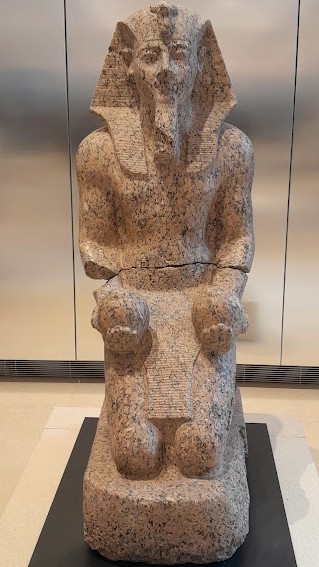
The sculpture in pink granite of the Egyptian Museum in Turin presents the pharaoh Amenhotep II serene, with a hint of a smile, natural eyes, a muscular and strong body. In the new installation of the Gallery of Kings , Amenhotep is placed in front of his father Thutmose III, with whom he reigned in co-regency in the early years. The king is kneeling, offering two vessels of wine to the deities, in his role as intermediary between the human and divine worlds. Wine was considered an expensive drink, reserved for the wealthy classes, and at the same time an offering in religious and funerary rites.
Do you want to know more? Then book a guided tour of Turin in English or discover with a guide the Egyptian Museum in Turin