Venaria Reale: Courtly Splendour and the Art of Silk
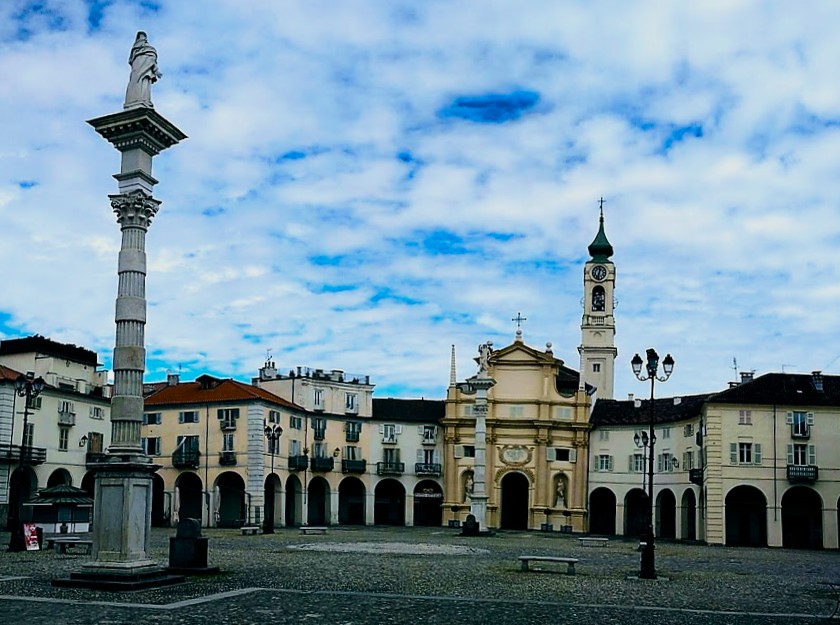
Once known simply as Altessano, the town we now call Venaria Reale originally consisted of two small villages — the Lower and the Upper Borgo. The latter was considered healthier thanks to its higher elevation above the surrounding plain. The name Venaria was introduced by Duke Charles Emmanuel II of Savoy, who wished to transform the area into a royal hunting reserve, inspired by the French word vénerie, meaning “the art of horseback hunting.” From that moment, the two villages were united under one name: Venaria Reale. More than just a place of leisure for the royal court, Venaria soon became a hub of productive and commercial activity, thanks to its proximity to Turin and its abundant water sources. The goal was clear: to turn Venaria into a centre of manufacturing excellence, particularly in the lucrative silk trade — one of the most prized commodities of the time. To promote the town as a centre for silk production and trade, the architect Amedeo di Castellamonte designed Piazza dell’Annunziata with remarkable urban vision. The many shops and workshops facing the arcades were clearly visible from the street, allowing artisans to work silk and fine fabrics in view of passersby, showcasing their skills and techniques. The concept was that of an open-air laboratory, where craftsmanship and commerce could merge into one elegant urban space. The manufacturing complex was built on the right bank of the nearby Ceronda stream, carefully located to accommodate every stage of the production cycle. The plant was equipped with hydraulic wheels powered by the waters of a canal diverted from the Dora Riparia, providing the energy needed to operate the machinery. Silk production — initially carried out by women working from home — gradually evolved into an organised and profitable industry. To support this new industrial centre, the House of Savoy introduced tax exemptions, financial incentives and protectionist measures, encouraging the establishment of the first silk manufactories around 1670. By the mid-19th century, silk spinning employed more than 600 workers, and in the 20th century the factory was taken over by the company Snia Viscosa, which eventually employed over 6,000 people. It was mainly Venetian immigrants, recruited directly by Snia, who gave the town its new identity. The company provided them with housing in a vast workers’ district, around which the church of San Francesco was later built. Many chose to settle permanently in Venaria: in nearby Turin, housing was scarce or unaffordable, and newcomers from southern Italy often faced discrimination. Thus, through factories, workshops, new communities and the lingering splendour of the Savoy court, Venaria evolved from a rural village into a lively royal — and later industrial — town, where work, creativity and beauty have continued to intertwine up to the present day.
Do you want to know more? Then book a guided tour of the Royal Palace of Venaria in English