The neoclassical and romantic taste of Turin Royal Palace
During the 19th century, the Royal Palace of Turin also underwent major transformations inspired by the neoclassical and romantic atmospheres of the time. In 1834, King Carlo Alberto of Savoy-Carignano commissioned the Bolognese architect Pelagio Pelagi to update the royal apartments to the new classical taste.
Under his direction, in a refined and eclectic construction site, painters, sculptors, bronze workers, upholsterers and minusieri achieved a perfect synthesis between the Baroque tradition and new trends.
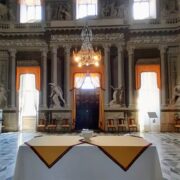
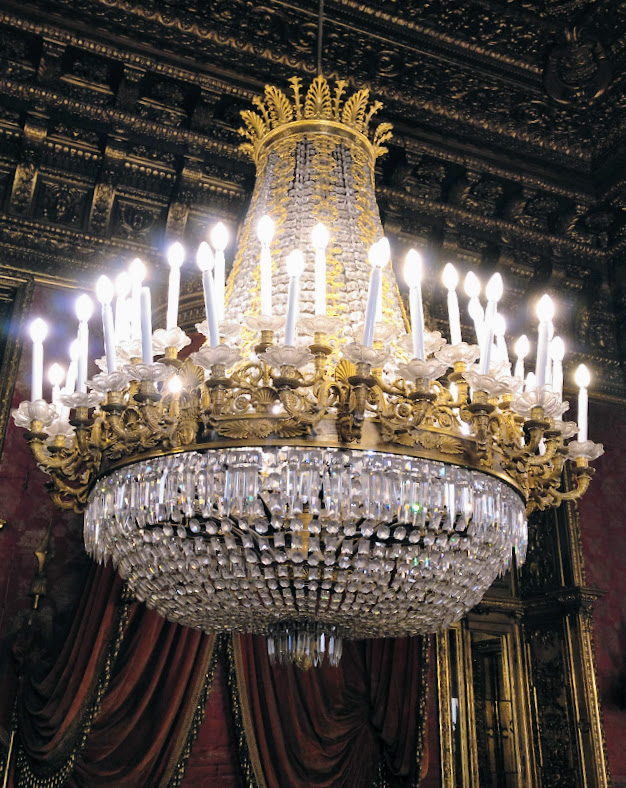
In the Hall of the Swiss Guards, for example, the 17th-century tapestry was replaced with a glossy green stucco covering imitating the underlying marble. The same sculptor Giuseppe Gaggini created two wall tables to protect the large painting of the Battle of San Quintino, by Palma il Giovane, from the heating coming from the heat vents below and redesigned the frame. In 1842, on the occasion of the wedding of Vittorio Emanuele II to Maria Adelaide of Habsburg-Lorraine, 44 bronze appliques were installed for the gas lighting of the palace. On the same day, 12 April 1842, the sumptuous ballroom was also inaugurated. The eight neo-Empire style chandeliers stand out, characterised by a double-crown bronze structure, culminating with palmettes and joined by long chains of cut Bohemian crystal of various shapes and diamond cut, made by the bronze workers Colla and Odetti of Turin.
After seven years of intense work, the ideal scenario for court dances was born. In the nineteenth century, social dances allowed people to create relationships and exchange information. Dance was a precious opportunity to approach other people and in particular the waltz, in which the gentleman, by putting an arm around the lady’s waist, could come into contact more easily. If with the quadrille there was only a touch, now the gentleman could finally hug the lady. This is why the waltz, nicknamed the dance of love, was initially considered scandalous and too daring.
Do you want to know more? Then book a guided tour of Turin in English or discover with a guide the Royal Palace of Turin